
Caddo Parish Recycling Guide: What Goes Where
Curbside recycling and roll-off dumpsters serve very different purposes — here’s how Caddo Parish residents can tell which one fits their project.
Shreveport dumpster guide
Caddo Parish’s famous red clay is part of the landscape here — here’s what it actually means for placing a dumpster on your property.
If you’ve dug a fence post hole or watched a construction crew break ground anywhere in Caddo, Bossier, or Webster Parish, you’ve seen it — that distinctive reddish-orange clay just beneath the topsoil. It’s the same iron-oxide-rich sediment that gives the Red River its name and its color, washed down over time from Permian “Red Bed” formations. Locally, soil surveys generally classify it under the Ruston and Bowie series, and it shows up in yards, roadcuts, and construction sites across the region. It’s simply part of the ground we all live on here.
You may have heard that clay soils can cause problems for foundations in some parts of the country. It’s worth being clear: that’s not really the story here. This isn’t a guide about clay damaging your slab or driveway — it’s a practical guide about how red clay behaves under a loaded dumpster on the day it’s sitting on your property, particularly when the ground is wet. That’s a site-access and placement question, not a structural one, and it’s worth understanding before delivery day.
A loaded 20 or 30-yard dumpster is heavy — several tons resting on a relatively small footprint. On a dry, hard surface, that’s a non-issue. But red clay, like most clay soils, gets slick and soft when it’s saturated. After a heavy rain, a dirt or gravel area that felt perfectly solid a day earlier can turn soft enough that the weight of a loaded container causes the rails or rollers to sink slightly, leaving ruts behind. It’s not dramatic, but it’s avoidable, and it’s the main thing we watch for when placing containers anywhere off pavement in this region.
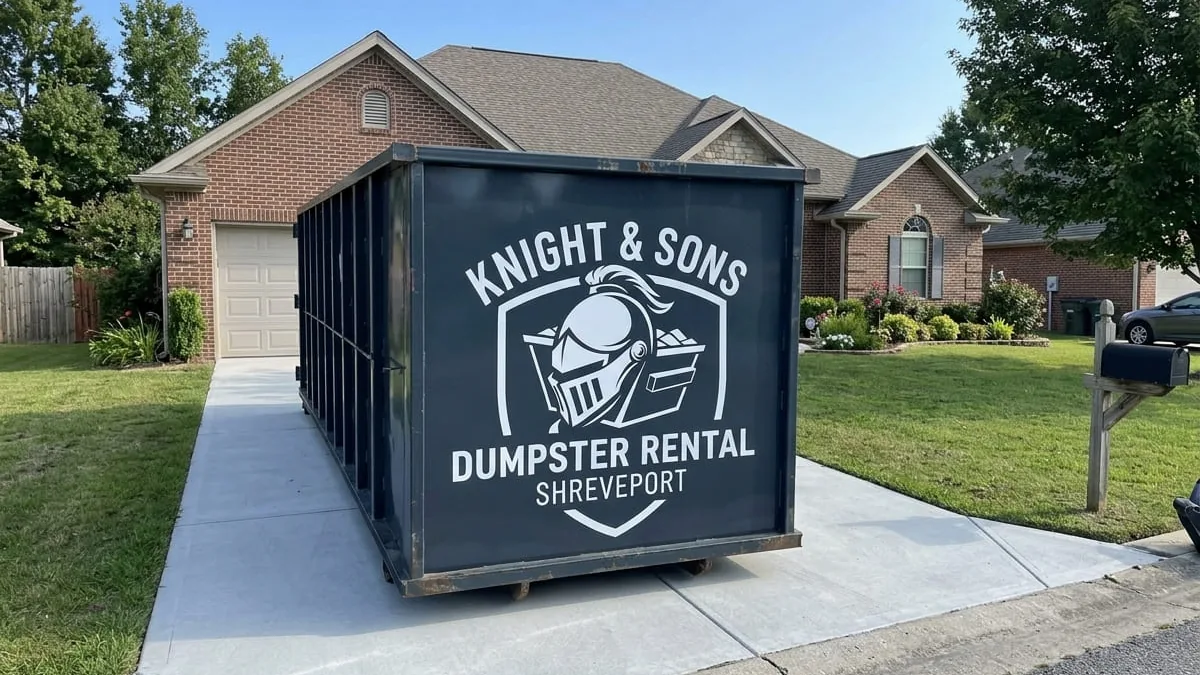
The simplest fix is also the most effective: place the container on a driveway or other paved, hard surface whenever one is available, rather than on grass or bare dirt. Pavement spreads the load evenly and isn’t affected by rain the way exposed clay is. If a driveway isn’t an option and the container has to sit on a dirt or grass area, a few precautions help:
If your dumpster is already sitting on a dirt or grass surface and the area gets soaked, don’t be alarmed by minor sinking or a slight tilt — it’s a known behavior of saturated clay under load, not a sign anything is wrong with the container itself. Just let us know if it looks significant when we come for pickup, and our driver will account for it when repositioning the truck.
To be clear about the bigger picture: local geotechnical research has actually found Caddo, Bossier, and the surrounding North Louisiana parishes rank among the least vulnerable areas in the state for the kind of shrink-swell clay damage that affects foundations elsewhere — that risk is concentrated in southeast Louisiana, not here. So this guide isn’t about protecting your home from the clay itself. It’s simply about giving a loaded dumpster the most stable surface possible so delivery, use, and pickup go smoothly, regardless of what the weather’s been doing.
When you book, it helps to describe your intended placement spot — driveway, gravel pad, or lawn — along with roughly 60 feet of clear approach and 25 feet of overhead clearance for delivery. If pavement isn’t available, we’ll talk through board placement and timing so the site holds up well for the full rental period. Browse our dumpster sizes to see footprints for each container, or head to our sizing guide if you’re still deciding.
Our drivers place containers across Shreveport, Bossier City, Blanchard, Greenwood, Keithville, and the wider Caddo, Bossier, and Webster Parish area regularly, and we’re familiar with how local ground conditions behave. Tell us about your site when you call and we’ll help you plan a placement that holds up. Reach us at (318) 616-9108 or through our contact page.
FAQs
No. Research on soil types across Louisiana has found Caddo and the surrounding North Louisiana parishes are among the least vulnerable areas in the state for expansive clay damage — that risk is concentrated in southeast Louisiana. The local clay is a placement and access consideration, not a structural risk to your property.
Yes, but pavement is preferred when it’s available since it spreads the container’s weight evenly. If dirt or grass is the only option, boards placed under the rails or rollers help distribute the load, especially if the ground is damp.
Red clay, like most clay soils, gets slick and soft when saturated. A loaded container sitting on wet clay can cause minor sinking or rutting, which is avoidable by placing on pavement or timing delivery around heavy rain when possible.
Minor sinking or a slight tilt on a saturated dirt or grass surface is a known behavior of loaded weight on wet clay, not a sign of a problem with the container. Mention it when we arrive for pickup and our driver will account for it.
We generally need about 60 feet of clear approach and 25 feet of overhead clearance to place a container safely, whether on pavement or a dirt/grass area.
Ready when you are
Call and you will speak to someone local who knows the streets, the permit rules and which box actually fits your driveway. Flat rate quoted up front.
Keep reading
Curbside recycling and roll-off dumpsters serve very different purposes — here’s how Caddo Parish residents can tell which one fits their project.
From a garage purge to a whole-house remodel, here’s how to match your project to the right dumpster size — before you book, not after.
Straight answers on what a Shreveport dumpster rental costs, what’s included in our flat rate, and what actually drives the price up.