
Dumpster Placement on Caddo Parish’s Red Clay Soil
Caddo Parish’s famous red clay is part of the landscape here — here’s what it actually means for placing a dumpster on your property.
Shreveport dumpster guide
From spring thunderstorms to occasional Gulf hurricane remnants, here’s how Shreveport homeowners can handle storm debris cleanup efficiently and safely.
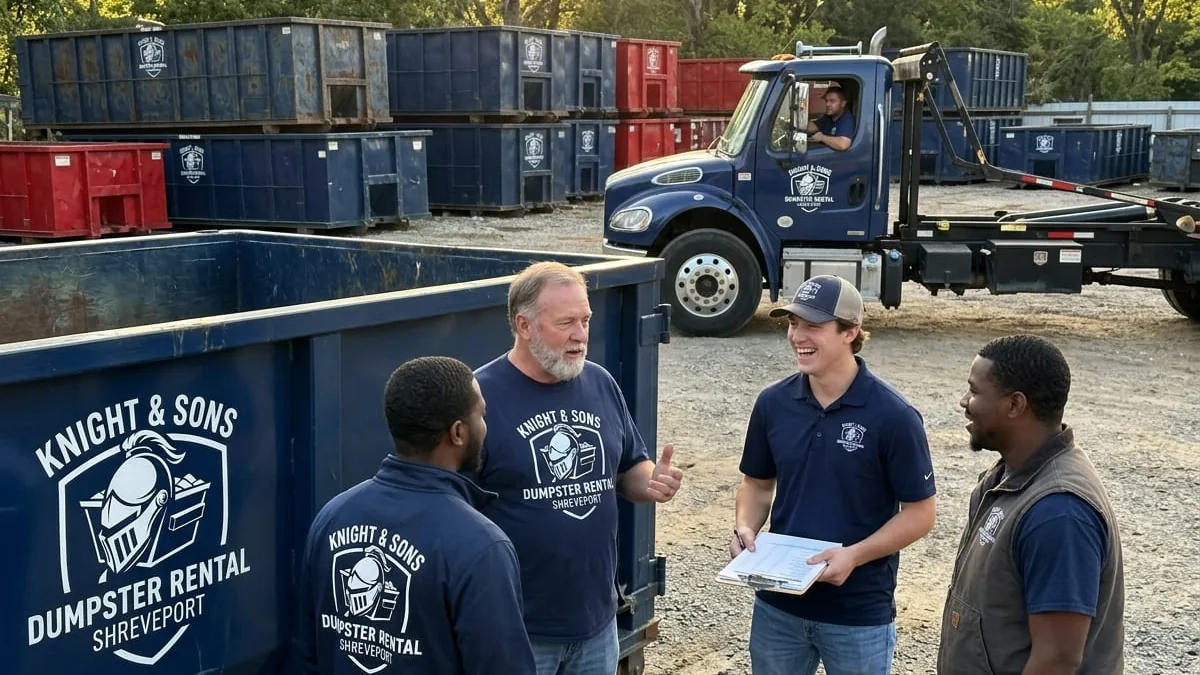
The Ark-La-Tex sees its share of rough weather — spring and summer bring severe thunderstorms and the occasional tornado risk, late summer and fall can bring heavy rain from Gulf systems moving inland, and winter occasionally delivers an ice event that takes down limbs and power lines. None of that is unusual for Shreveport, but when a storm does move through, having a plan for the cleanup afterward makes the whole process faster and less stressful.
Storm cleanup around Shreveport and Bossier City tends to fall into a few predictable categories: downed tree limbs and brush, damaged roofing and siding material, fencing knocked loose or destroyed, and water-damaged household items like carpet, drywall, insulation, and furniture if a home took on water. Some storms bring mostly yard debris; others bring a mix of structural damage and interior loss. Knowing roughly which category your cleanup falls into helps a lot when it comes to sizing a dumpster.
Storm debris varies more than almost any other job type, so sizing depends heavily on what actually came down. A yard full of limbs and brush from a single tree is often light enough for a 10 or 15-yard container, even if it looks like a lot of volume. Roofing and structural damage debris behaves more like a tear-off job — heavier per square foot — and often calls for a 20-yard. If you’re dealing with water-damaged interior materials on top of exterior damage, a 20 or 30-yard gives room for both. When you call, just describe what you’re seeing — limbs, roofing, interior damage, or some combination — and we’ll help you land on a size. Our sizes page and sizing guide are good starting points if you want to look before you call.
After a storm, the biggest delay to getting a dumpster delivered usually isn’t availability — it’s access. Our trucks need a clear approach to place a container safely, and downed limbs, debris in the driveway, or a blocked street can hold up delivery. Before you call, it helps to:
If access is genuinely blocked and you’re not able to clear it yourself, tell us when you call — we can talk through timing or alternative placement on the property.
After a significant storm moves through the region, demand for dumpsters tends to spike as a lot of households and contractors are cleaning up at once. Booking as early as you can — even a rough placeholder call while you’re still assessing damage — helps make sure a container is available when you’re ready to fill it. We serve Shreveport, Bossier City, Blanchard, Greenwood, Benton, Haughton, Minden, and the surrounding communities across Caddo, Bossier, and Webster parishes, and we do our best to keep response times reasonable even when a lot of calls come in at once.
It’s a common misconception that storm cleanup is an exception to normal dumpster rules — it isn’t. Even when debris is storm-related, the same prohibited materials apply: paint, fuel or oil, chemicals and solvents, asbestos-containing material, batteries, tires, hazardous or medical waste, and appliances that still hold refrigerant. If a storm damaged an outbuilding or garage and chemicals or fuel containers got mixed into the debris pile, set those aside separately rather than tossing them in with the rest. If you’re unsure whether something qualifies, just ask — we’d rather answer the question up front than have it become a problem at pickup.
Once the yard or structure debris is out, some storm cleanups turn into larger repair projects — a reroof, siding replacement, or interior renovation from water damage. If that’s the direction your project is heading, our roofing dumpster rental and general services pages cover what comes next, and our team can help plan a second container if the scope grows beyond the initial cleanup.
Whether you’re clearing downed limbs after a spring thunderstorm or dealing with roofing and water damage from a heavier system, our team is ready to help you size and schedule a container quickly. Call (318) 616-9108 or reach out through our contact page — we’re open Monday through Saturday, 7:00 AM to 7:00 PM.
FAQs
It depends on demand at the time and access to your property, but calling as early as possible — even while you’re still assessing damage — gives us the best chance to schedule delivery quickly. Demand tends to rise right after a significant storm moves through the region.
It depends on what type of debris you have. Yard debris like limbs and brush is often lighter and fits a 10 or 15-yard container, while roofing or structural damage debris is heavier and usually calls for a 20-yard or larger. Describe what you’re seeing when you call and we’ll help size it.
Yes, water-damaged household items like drywall, carpet, insulation, and furniture are common in storm cleanups and are fine for the dumpster, within the container’s weight allowance.
No — the same prohibited materials apply regardless of the cause. Paint, fuel and oil, chemicals, batteries, tires, and hazardous or medical waste can’t go in the dumpster even if a storm is what mixed them into the debris pile.
Clear what you safely can before delivery, and never approach debris near a downed power line yourself. If access is still blocked when you call, let us know — we can talk through timing or alternate placement on your property.
Ready when you are
Call and you will speak to someone local who knows the streets, the permit rules and which box actually fits your driveway. Flat rate quoted up front.
Keep reading
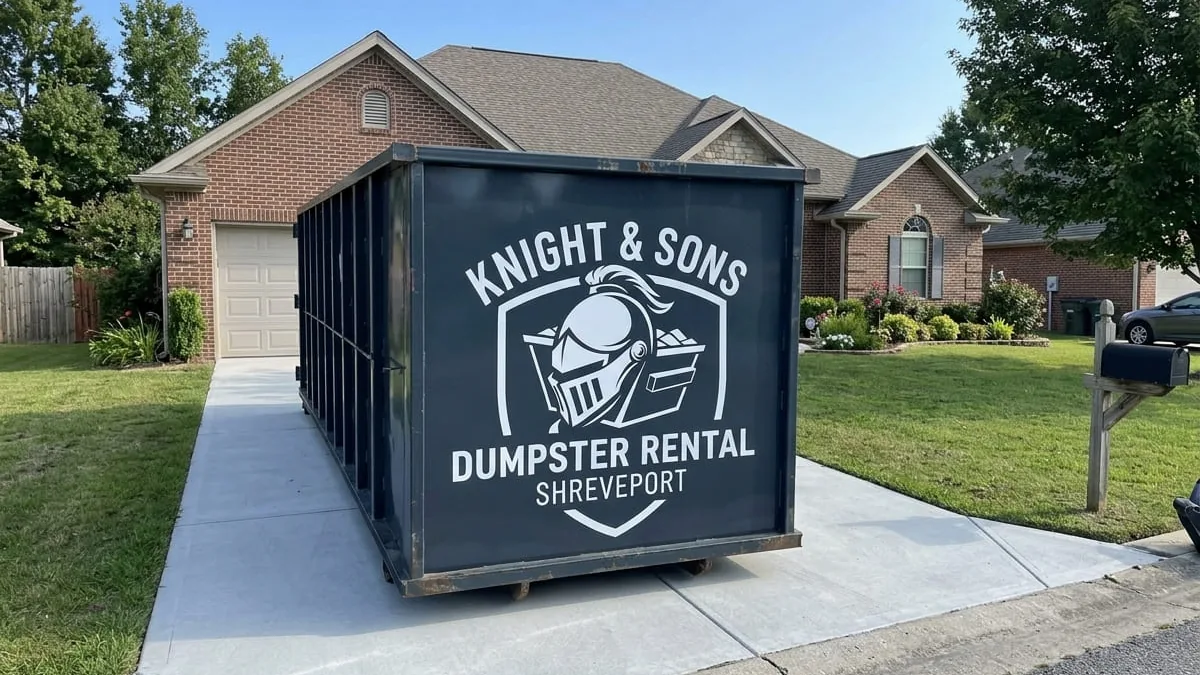
Caddo Parish’s famous red clay is part of the landscape here — here’s what it actually means for placing a dumpster on your property.
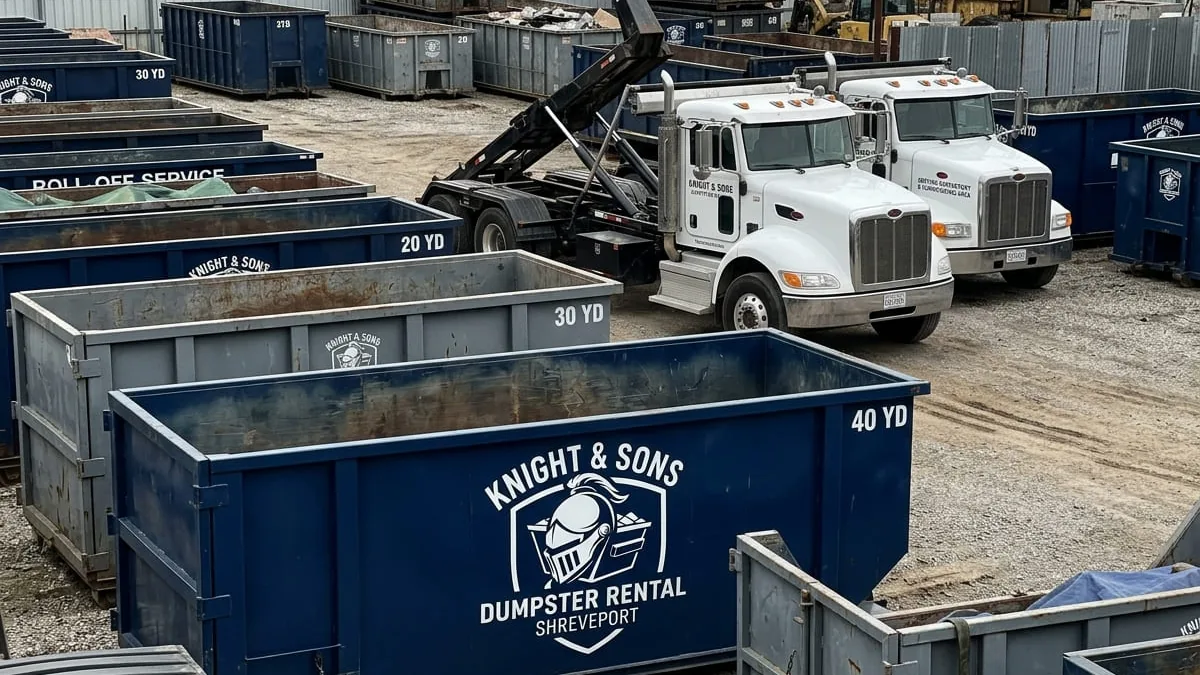
Curbside recycling and roll-off dumpsters serve very different purposes — here’s how Caddo Parish residents can tell which one fits their project.
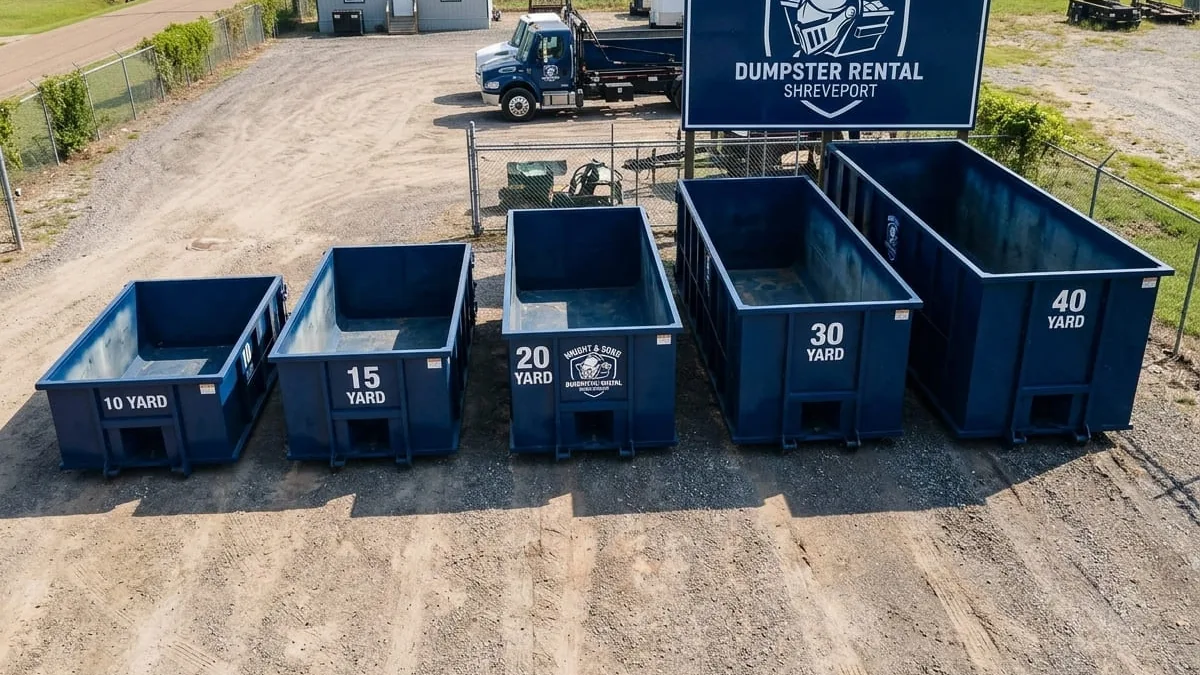
From a garage purge to a whole-house remodel, here’s how to match your project to the right dumpster size — before you book, not after.